Most behavior problems owners describe as "my dog is difficult" are really "my dog is under-exercised." But the opposite mistake is just as common: a well-meaning owner running a five-month-old puppy for three miles and damaging joints that haven't finished growing. Getting exercise right means matching the amount, the type, and the intensity to the dog in front of you.
A quick note: This is general education. Your veterinarian knows your dog's joints, heart, and weight history — check with them before starting a new exercise routine, especially for puppies, seniors, overweight dogs, or any dog with a diagnosed condition.
How much exercise does a dog need per day?
There's no single number. A Border Collie and a Bulldog share a species and almost nothing else. Use this as your starting point, then adjust based on how your dog actually behaves:
| Dog type | Examples | Daily target | Notes |
|---|---|---|---|
| Flat-faced / low-endurance | Bulldog, Pug, Shih Tzu, Boston Terrier | 20–40 min | Short sessions, cool hours only — they overheat fast |
| Small companion | Chihuahua, Maltese, Pomeranian, Yorkie | 30–45 min | Splits well into 2–3 short walks |
| Medium all-rounder | Beagle, Cocker Spaniel, Corgi, Mini Schnauzer | 45–60 min | Add sniffing time — scent hounds need nose work |
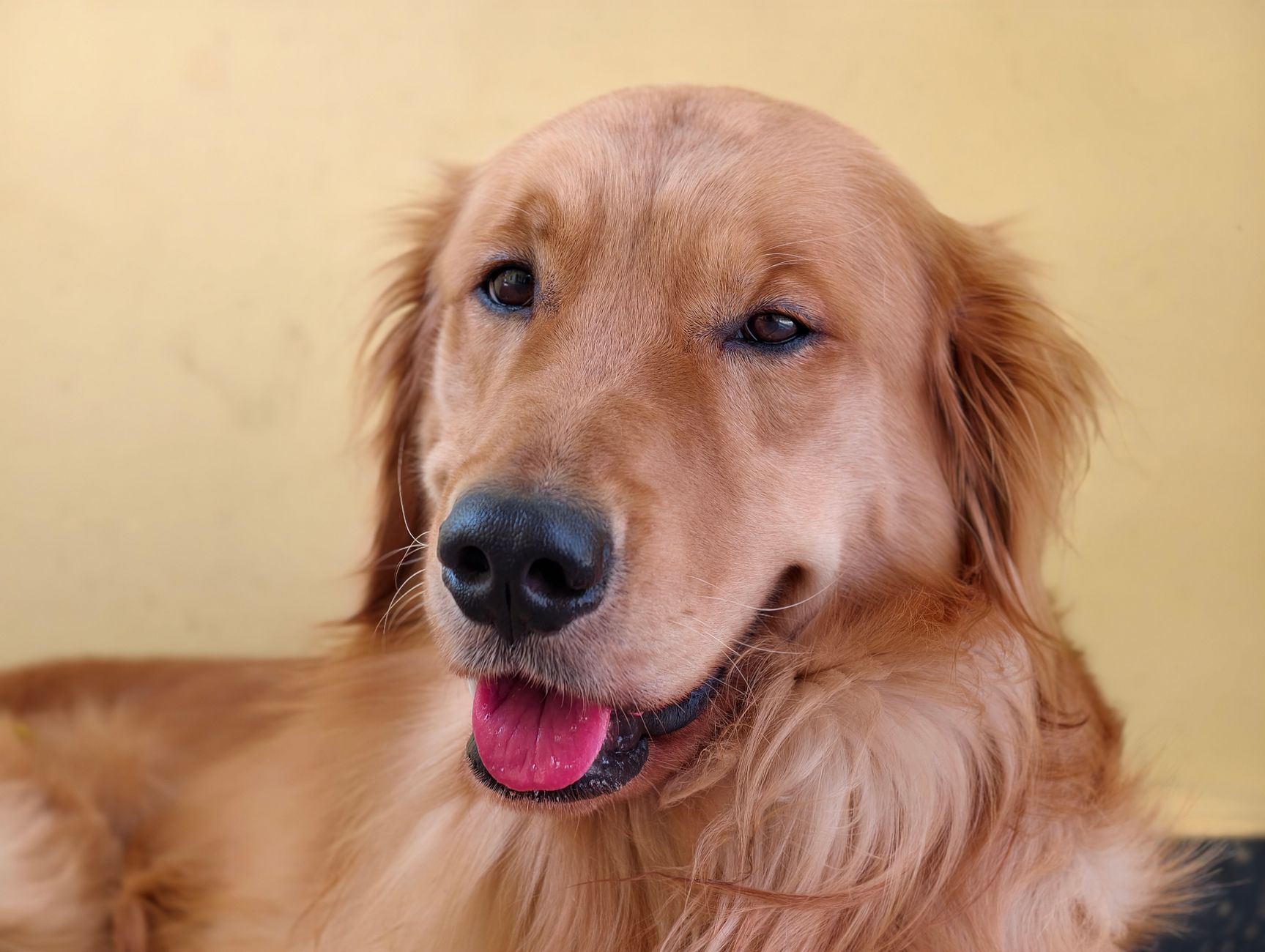
| Sporting / retriever | Labrador, Golden, Springer, Vizsla | 60–90 min | Built to work all day; swimming is ideal |
| Herding / working | Border Collie, Aussie, Malinois, Husky | 90–120+ min | Physical alone won't do it — needs a job |
| Giant breeds | Great Dane, Mastiff, Newfoundland | 45–60 min | Low-impact; protect the joints, skip long runs |
| Seniors (any breed) | 8+ years, or 6+ for giants | 2–3 gentle walks, 15–30 min each | Consistency beats intensity |
Puppies: the 5-minute rule
A widely used guideline is 5 minutes of formal exercise per month of age, up to twice a day. A four-month-old puppy gets about 20 minutes, twice daily. That covers structured walks — free play in the yard at their own pace doesn't count against it, because a puppy self-regulates and stops when tired.
What matters more than the minutes: avoid repetitive high-impact activity until the growth plates close — roughly 12 months for small breeds, 18–24 months for large and giant ones. No jogging alongside a bike, no repeated jumping, no long hikes on hard ground. Damage done to a growing joint often doesn't show up until the dog is six and arthritic.
The best exercises for dogs
Variety beats volume. Rotate through these instead of walking the same block twice a day:
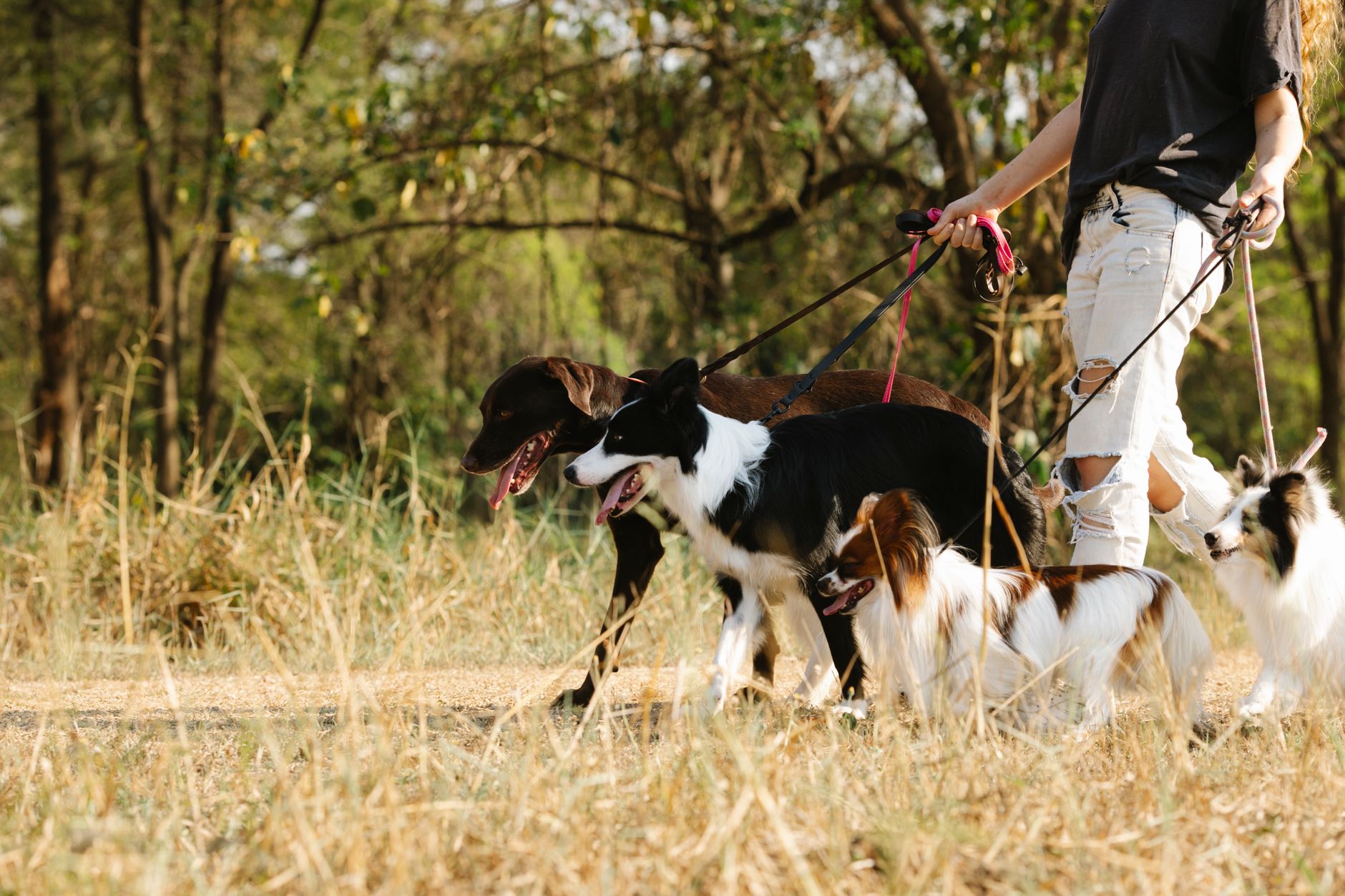
- •Brisk leashed walk — the foundation. Pace matters: a walk your dog can hold a trot through does far more than a stop-start stroll.
- •The "sniffari" — a slow walk where the dog chooses the route and sniffs freely. Ten to fifteen minutes of scent work tires a dog roughly as much as a much longer walk, and it lowers stress.
- •Fetch — great cardio, but the repeated sprint-and-brake is hard on joints. Cap it, throw along the ground rather than high, and stop before your dog is exhausted.
- •Tug — full-body, builds engagement, works fine in a small apartment. Teach a clean "drop it" first.
- •Flirt pole — a lure on a rope. Enormous energy burn in a small space; keep sessions under five minutes and avoid sharp turns for young dogs.
- •Swimming — the best low-impact option there is. Ideal for arthritis, recovery, overweight dogs, and any breed with joint concerns. Always supervised, with a life vest for beginners.
- •Hills and stairs — builds rear-end strength quickly. Introduce gradually; skip entirely for puppies and dogs with back problems.
- •Training and puzzle feeders — ten minutes of nose work or trick training genuinely tires a dog. This is how you handle a rainy day, a recovering dog, or a herding breed you can't out-walk.
- •Canine sports — agility, scent work, rally, dock diving. The answer for high-drive dogs whose real need is a job, not more miles.
Sample daily routines
Adult medium-energy dog (~60 min)
- •Morning: 25-minute brisk walk
- •Midday: 10-minute puzzle feeder or training session
- •Evening: 20-minute walk with 10 minutes of free sniffing
- •Twice a week: swap the evening walk for fetch or a longer hike
High-energy working breed (~2 hrs)
- •Morning: 45-minute walk or run, plus 10 minutes of obedience
- •Midday: flirt pole or fetch, 15 minutes
- •Evening: 45-minute walk, plus scent work or a training session
- •Weekly: one long hike or a sport class
Senior dog (~45 min total)
- •Three 15-minute gentle walks on soft ground
- •Daily light stretching or slow figure-eights around cones
- •Swimming once a week if available
- •Skip the extremes: no cold mornings, no hot afternoons
When exercise becomes too much
Dogs will run past their own limit to keep up with you. Watch for:
- •Lagging behind, or sitting down mid-walk
- •Heavy panting that doesn't settle within 10 minutes of stopping
- •Limping — especially the next morning, which is the classic sign you went too far
- •Sore, cracked, or raw paw pads
- •Reluctance to go out at all
Any of these means scaling back for a few days. Persistent lameness means a vet visit.
Heat and cold rules
- •Test the pavement: press the back of your hand to it for seven seconds. If you can't hold it, your dog can't walk on it.
- •Above about 27°C / 80°F, move walks to early morning and late evening. For flat-faced breeds, that threshold is lower.
- •Heatstroke is fast and can be fatal. Excessive panting, drooling, wobbling, or bright red gums — stop, cool with room-temperature water, and get to a vet immediately.
- •In winter, rinse paws after salted sidewalks, and shorten sessions for thin-coated and small dogs.
Exercise, weight, and the number that actually tracks progress
Exercise alone rarely fixes an overweight dog — calories do most of the work. But the two together are how you get a lasting result, and the only way to know it's working is to weigh consistently: same scale, same day of the week, logged over months. A dog losing 1–2% of body weight per week is on a healthy trajectory.
This is where a record beats memory. In PetLover, each weigh-in goes onto your dog's health timeline, so you see a real curve instead of guessing — and the app's heat, cold, and storm safety alerts flag the days when the usual long walk is a bad idea. Add your dog's activity level to their profile and the AI guidance adjusts to the dog you actually have, not an average one.
Frequently asked questions
Is one walk a day enough for a dog?
For a low-energy or senior dog, often yes. For most adult dogs, two shorter walks beat one long one — it breaks up the day and gives them more chances to toilet, sniff, and decompress.
Can I run with my dog?
With a healthy adult dog of a suitable breed, yes. Build up gradually over weeks, avoid hot pavement, and skip it entirely for puppies under 12–18 months and for flat-faced breeds.
How do I exercise a dog in a small apartment?
Tug, a flirt pole in a hallway, stair work, hide-and-seek with treats, puzzle feeders, and 10-minute training sessions. Mental work is the apartment owner's best tool — it produces a genuinely tired dog without space.
My dog is still hyper after a long walk. What's wrong?
Usually the exercise is physical but not mental. Herding and working breeds need problems to solve. Add scent work, training, or a sport before you add more miles — more miles on a fit working dog just builds a fitter dog.
How much exercise does a senior dog need?
Less intensity, same consistency. Two or three short, gentle walks daily maintain muscle and joint mobility. Stopping exercise entirely accelerates decline.
The bottom line
Match the minutes to the breed, match the intensity to the age, and vary the type so you're working the nose and the brain as well as the legs. Then track weight and how your dog recovers — those two signals tell you whether the routine is right far better than any chart can.